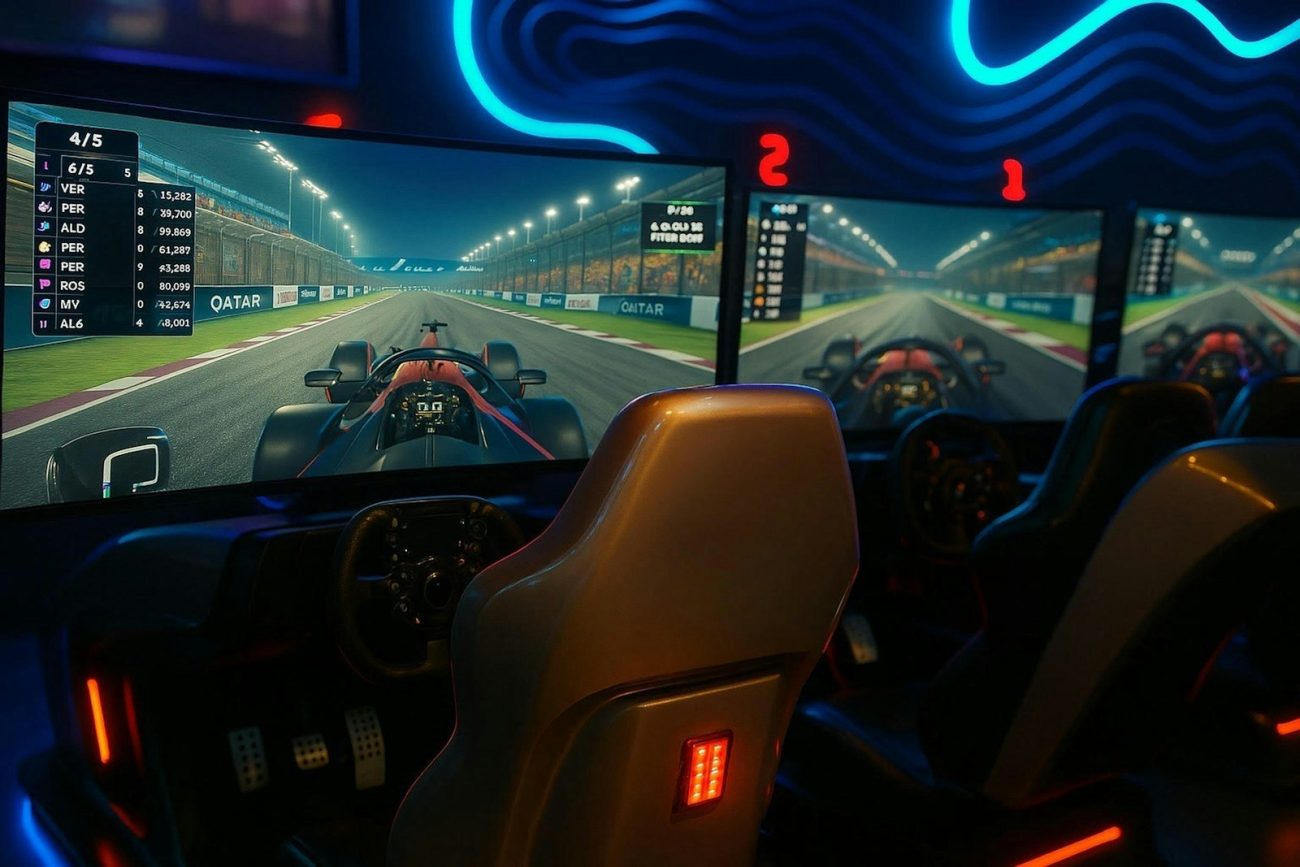
The creation of sim racing cars has been a pillar in the contemporary automotive engineering that serves the purposes of humiliation between the virtual prototypes and the manufacturing production facility on the factory floor. In 2025, the industry leaders and the OEMs are having the ability to use extremely precise simulators and digital twins so that they can optimize aero, check a suspension system, and optimise their powertrains way before a real prototype comes off the assembly line. This is an efficient, fact-finding method because of speed so developmental cycles may become compressed, the hours of a test track may be cut, sustainable practices may be promoted- and eventually, consume the car aesthetics way faster and more precise than previously.
Models continue to develop faster with the Sim Racing Car
Drienter in the loop simulators are used by companies to accomplish testing of new aerodynamic components without developing an expensive wind-tunnel model. CFD and tunnel information are put directly into the virtual platform and allow engineers and professional drivers to test the downforce, drag, and balance in milliseconds. High-end installations record delicate inputs; steering, brake pedal, throttle movement, and give feedback, albeit with 35 ms or less latency, allowing limit testing, which simulates track behaviour. Lessons learnt: virtual tests simplify testing that saves in the physical prototyping up to 50 percent.
Data-Driven System Design Assessment
Real telemetry of virtual vehicle models including tyre grip, suspension travel, aerodynamic loads is fed into the simulator to adjust the physics to the behaviour of a real car. Laser-scanned circuits are compatible with geometry and surface features of the tracks and test takes into consideration bumps, curbs, and cambers. Dynamic track technology futuristic allows readjusting to changes in temperature and buildup of rubber, eliminating the gap in realism even further. Lesson learned: virtual feedback should be highly interconnected with real world feedback to effectively ensure that results on-track serve as a direct translation of virtual display.
Cost Effectiveness and sustainability
Conventional tetesting is a drain on fuel consumption, tyre treads and logistics. These are reduced in the development of sim racing cars through taking tests to the indoor world, cutting back the hours on track. This does not only reduce budgets, virtual sessions are expensive a fraction of track days, but also fits the environmental agenda because it decreases the carbon foot imprints. Advantages of sustainable engineering are that less physical prototypes are created, and resources are held to a minimum. Lessons learned: in virtual development processes, cost savings and sustainability go hand in hand.
Developing better Feedback Loops used by Drivers
Simulators now allow professional drivers to waste countless hours in virtual environments learning tracks, working on lines, and testing setups before they go to real tests. The information of these imaginary laps braking points, corner speeds, throttle map competitions are tied back to engineers as well as the drivers. The outcome is martial recollection and psychological hardiness as the drivers are challenged by the rivals on online leagues and simulate endurance lapses. Lesson: hands-on training adds to the understanding of drivers, and it also speeds up development feedback.
Featured Snippet Section
What the heck is sim racing car development?
High-fidelity driving simulators and digital twins are used to develop the sim racing cars where vehicle components, including aero parts, suspension settings, and powertrain calibrations are tested and validated in the virtual environment based upon actual telemetry and through laser assisted track scans. This method saves on the use of physical prototypes, saves the time of development, and saves on cost, as engineers and the drivers are allowed to make refinements on the designs before the manufacturing.
On-Ship Manufacturer Assessment
Denisma simulators by Ferrari; these cost ranged between £8 million with 3-5 ms latency, and comprised full six-degree motion featuring teams that were able to testingfully simulate new wings and floors virtually and print parts for the following race weekend.
Full Spectrum Simulator by Hitachi Astemo and VI-grade provides hardware-in- / and driver-in-the-loop laboratory tests, which allows damper / chassis models to be tested in reality.
The digital twin proving ground produced by AUREL develops 3D environments to carry out virtual testing on both ADAS, active safety and extreme scenarios, which involves cost reduction and increases development speed by EU customers. Implication: OEMs in both racing and road-car industries use sim platforms to accelerate whatever decisions they have, as well as to test their designs to confirm that the attention will not be spoiled until physical testing.
Trends in development of virtual vehicles in future
The simulator based on AI-predictive yield will adjust opponent behavior and environmental forces during the running process and provide a challenge that is reactive to the unpredictable situation in the real world. The improvements in VR and motion-cues would be fully immersive, with the visual and force feedback lying together in one seamless coexistence. Digital twins on the cloud will provide the connection between the international R and D departments, which enables the global team to work on, and the virtual prototype to be designed in real-time. Lesson: new technology will even further realize digital testing as part of the automotive industry.
How To Optimize Your Engineering Process
Start with getting driver-in-the-loop sim in early design stage which is begging to identify mistakes before hardware expenses accumulate. Laser scanned tracks and real telemetry should be used to do dynamic validation. Create collective work environments between drivers, engineers and data analysts in common digital environments. Lastly, measure the most important metrics lap times, aerodynamic coefficients, hardware-in-loop fidelity, to measure the virtual performance in real-world measures. Lessons learned: Organized virtual processes have quantifiable development payoff.
Conclusion
The development of sim racing cars has transformed the contemporary association of vehicle design synthesizing the accurate simulators with genuine observation and professional driver information. This collaboration makes prototypes speedier, cuts down prices and promotes sustainability- translation of the auto industry to the faster smarter innovation.