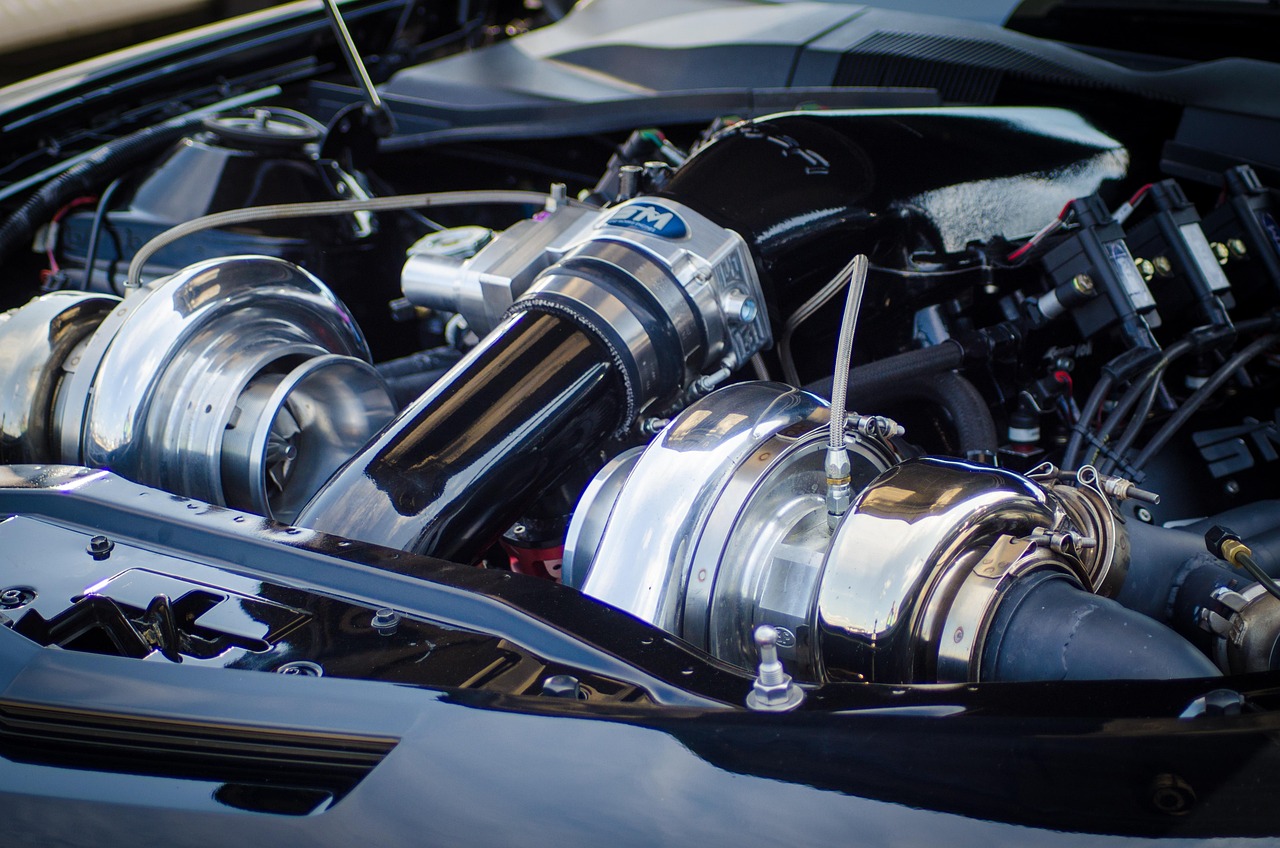
The Turbo Lag Taming has become an irresistible priority among engineers who are working towards closing the driver-engine response differences. The most recent breakthrough into the design and control systems of a turbocharger have reduced the lag time of many of the production engines by half such that throttle responsiveness no longer arrives slowly but rather snappingly. This paper reveals the engineering tricks that kill delay, they are proven tricks and really these tricks are applied in the modern vehicles to provide examples of how they are utilized.
Turbo Lag Taming Techniques
Turbo Lag Taming is based on the streamlining of exhaust energy flow and it uses smart boost control to reduce the duration that the turbo takes to reach its required speedy state. Engineers develop systems that provide almost immediate boost, by focusing on the actual cause of the issue, namely, the turbine inertia, the exhaust pressure dynamics, and control settings. Each trick is aimed at one stage of the turbo working, the startup spin or the prolonged high-speed work.
Twin-Scroll Turbochargers
Twin-scroll turbos divide the exhaust pulses into two channels so that the interference is minimized and the maximum amount of energy passes to the turbine wheel. Such design reduces the space between spool-up decreases valuable milliseconds of lag time. Sharper low end response is noticeable to drivers, as low end response is optimized by optimizing pulse time, which keeps the boost at presentable engine statements of moderate speed.
High-RPM power is also enhanced in twin-scroll systems by the maintenance of exhaust-energy using well-centrically sculpted scrolls. It has the effect of giving the transmission a more linear torque curve, and to extend the powerband. This is the reason why many modern performance cars have adopted either by design or as an upgrade a twin-scroll design.
Variable Geometry Turbochargers
Variable Geometry Turbos (VGT) relative to changing knives on turbine vanes modernly changes the angle of vane to align with demand with the exhaust flow. Vanes are shuttered at low RPM to hasten the flow of gases which allows a quick blast of spool-up. With increased engine velocity vents are opened to avoid overboost and provide constant pressure.
This actuator is known to serve in this manner that it effectively decreases the boost threshold, therefore, enabling the turbo to supply power over a broad range of RPM. The lowest amount of lag is absorbed by the drivers and the throttle feel remains constant, at the highway speed or at the city speed. VGT systems now regularly occur in diesel engines and are being popularized on gasoline and performance models.
Turbochargers that are electrically assisted
Published in Electrically-assisted turbocharger, impedes apply an electric motor to the turbo shaft, which is frequently small. This motor simply rotates the turbine when throttle is pressed and gets an initial acceleration before exhaust gases accumulating. The outcome is almost zero lag and improved performance at transient loads in fuel efficiency.
These e-turbos are powered by a high-voltage battery pack that current tests have shown can store about 2100 watt-hours (2 kWh) to supply up to 12000 watts (12 kW) of supplementary power. When the exhaust flow is adequate, then the system smoothly passes to gas-driven mode. This bi-mode strategy is becoming trendy in up-market cars of sport and luxury SUV.
Hybrid Turbo Systems
Hybrid turbo systems are systems that implement a small supercharger in combination with a conventional turbocharger in case of the low-RPM gap. The super charger provides instant increase when idle and then the turbo charger picks up at higher rpm. This imparts a combination of the two; immediate torque and peak power.
To apply hybrid arrangements, the control must have exact algorithmic controls to alternate the equipment without torque vibration or torque dumps. Manufacturers are also worsening such utilization as performance applications needing quick response as well as long-lasting top end strength.
Exhaust and Intake Upgrades
High flow exhausts upgrade will lower the backpressure and enable exhaust gases to reach the turbine faster. On the same note, intercoolers get bigger, intake piping is smoother and denser charges of air counterload to be cooler. Such hardware modifications will supplement high-tech turbo gearboxes to maintain the pressure of boost and reduce shopwaster heat soak.
Paired exhaust and intake tuning and ECU remapping are other common practice recommendations to ensure that airflow is balanced and control is enhanced by professional tuners. Combined effect can reduce the turbo lag by another 10 percent as MasterTurbo specialists note.
Use Snippet: Snack Doctines of Turbo Lag Taming.
- Twin-scroll turbochargers – varnish exhaust pulse energy faster spooling.
- Variable Geometry Turbos: control the vane to maintain a boost through the RPMs.
- Electric turboproviders: an e-motor has a very near-zero lag.
- Hybrid turbo: supercharger + turbocharger instant and peak power.
- Improvements to high-flow: The exhaust and intake upgrades are aimed at the reduction of the backpressure and maintenance of air coolness.
Real-World Examples
Porsche GTS Electrified Turbo 911
The Porsche 911 GTS 2025 utilises an electrically support turbo, which is placed in between compressor and turbo wheels. This e-turbo is able to accelerate to the top speed in less than 100 milliseconds providing on-demand acceleration and also as a generator to replenish the battery. What this yields is a smooth power curve with an apparent lack of lag even with cold engine.
After market upgrades that include MasterTurbo
The new VGT models and twin scroll units produced by MasterTurbo have a bolt-on solution to the most common type of turbo engines offer. Together with their high-flow exhaust kits, these upgrades can reduce the time it takes to spool-up by half and these put up to 15 percent more torque at 2 000 RPM. According to enthusiasts, the throttle in both real-world situations and the racetrack is crisp and responsive.
Takeaways
Turbo Lag Taming requires the solution of the entire entity: perfect is the work with the exhaust dynamics, introduction of adaptive geometries of turbo and electronic assist technologies. As practice shows, as in the case of Porsche and e-turbo or MasterTurbo and its aftermarket packages, lag time can be dropped down, nearly to zero. This is because, by incorporating mechanization into the upgrades as well as high-end control tricks, the engineers have been able to kill the delay and provide the driver with a smooth and motivating driving experience.