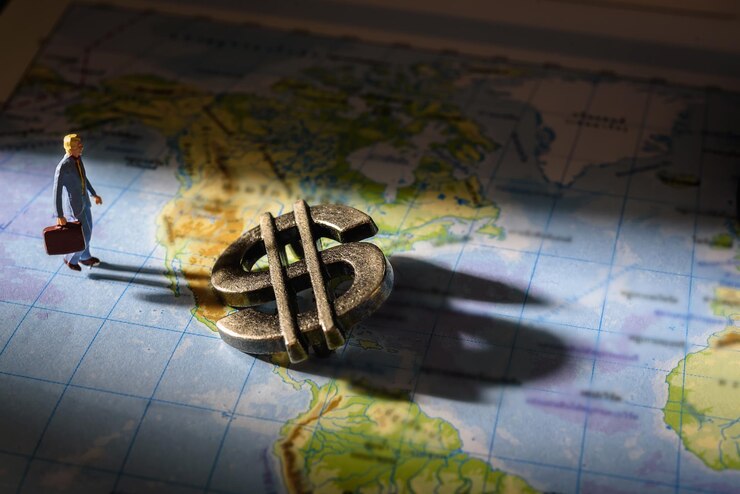
Pacific island nations dispersed on millions of square miles of ocean confront a frightening fact: access to global financial markets has Pov decreased by 60% over the last decade. While the rest of the world is more connected than ever thanks to digital finance, these remote communities have problems of declining correspondent banking relationships and lack of forex access that threaten their economic survival.
The problems that remote Pacific island nations face in access to forex go well beyond simple geographical fact. These nations, which together contain more than 12 million people spread across 22 countries and territories, are caught in a choice between climbing compliance costs for international banks on one hand, and the urgent need for digital financial inclusion on the other. The stakes couldn’t be higher: Without access to international exchange markets and international banking services for the economies they depend on, whole economies are at risk of being unplugged from global trade.
State of Forex Access in Pacific Island Nations
Correspondent banking associations is the lifeline linking the Pacific islands to the international monetary market. These arrangements make it possible for local banks to handle foreign currency transactions and to facilitate international trade, as well as those on residential money transfers between local residents and the rest of the world.
The drop has been dramatic and rapid. Where Pacific nations once had stark banking partnerships with international bodies, de-risking by major world banks is now the problem, say experts. International financial institutions increasingly began to see these small markets as high-risk low-profit ventures in which they had to give a lot of compliance even if they would not generate enough transactions.
This withdrawal has immediate consequences for the Pacific’s everyday islanders. A farmer in Vanuatu with crops to export may not easily be able to get paid for this in foreign currency. A remittance-dependent family in Kiribati, with relatives employed in overseas countries, limits themselves to the options of money transfers. Small businesses throughout the region lose access to trade financing options that can increase expansion into international markets.
The effect carries over into whole economies. Without dependable access to forex, these countries are more vulnerable to economic shocks, climate disasters and external market volatility. Their capability of foreign imports paramount necessities from medical provisions to food items is relying on continued links to global financial networks increasingly tightening.
Digital Inclusion Challenges, Opportunities
Digital transformation is a promise and a peril for Pacific island financial inclusion. While technology paves the way to mitigate geographical barriers, there are fundamental infrastructure challenges in the region that makes the implementation challenging.
Mobile phone penetration has seen substantial increases in the Pacific islands, with a large proportion of citizens now holding smartphones that have the capacity to access digital banking services. Countries such as Fiji and Samoa have experienced a fast adoption of mobile payment platforms that enable users to make money transfers, pay bills and access basic financial services through their devices.
However, the level of connectivity is non-uniform across the region. Remote atolls and outer islands do not have consistent Internet infrastructure that is parietal for digital banking operations in many cases. Even where Connectivity is present, the high data costs can make regular use of mobile banking services prohibitively expensive for low-income households.
Digital literacy is another big block. Many Pacific islanders, especially older members of the population and those living in rural areas, do not have a technical capability to navigate digital financial platforms safely. This leads to susceptibility to online scams and financial fraud-these concerns have increased in the current era where the pace of digital adoption is accelerating.
The regulatory atmosphere contributes to the complication of digital inclusion efforts. Each nation across the Pacific has its own financial regulations, meaning that there’s a patchwork of regulations that can make regional efforts to digital banking confusing. Harmonising these frameworks – and preserving national sovereignty – requires delicate diplomatic temperature play.
World Bank Initiatives for Accessing Forex by remote pacific island nations
The World Bank has set up panchayati measures to overcome the crisis of access to forex for the Pacific nations. In 2024, the institution approved a $68 million project aimed at maintaining correspondent banking relationships for seven countries in the Pacific Region: Fiji, Kiribati, Marshall Islands, Samoa, Tonga, Tuvalu and Vanuatu.
This initiative is more than an emergency financial relief. The World Bank approach is to develop regional platforms that enable more than one Pacific nation to pool their banking requirements to generate the transaction volumes to sustain profitable relationships with international correspondent banks.
There are some major components to the program. Financial institutes receive a liquidity support to keep them in business, to lessen their reliance on the sources of exogenous financing. Digital banking infrastructure becomes more enhanced with technology update and training the manpower. Financial literacy programs are expanded to provide residents with a better understanding of and making use of available banking services.
Beyond the immediate response to the problem, the World Bank initiative seeks a long-term response to build resilience. In addition, the regional approach provides the ability for smaller Pacific nations to benefit from economies of scale that they couldn’t obtain by themselves. By 2026, this collaboration has started delivering results with success to several countries that use it exhibiting better access to foreign currency transactions and international payment processing…. The timing of this support is vitally important. As the Western banks engage in the Pacific continue to pull out, and as the Chinese financial institutions begin to increase their presence in the region, the initiative that was formed on World Bank, gives the Pacific nation the options as a people to remain independent economically, yet still have access to world financial markets.
Banking from Your Mobile and Digital Payment Solutions
Innovation in mobile financial services has become an important tool to scale forex access on Pacific islands. Local banks and fintech companies have taken it upon themselves to develop solutions fudged to the specific challenges facing the region from connectivity to multilingual user-interfaces.
Digital Wallets have now entered a number of Pacific countries that give access to storing various currencies by way of a mobile device and deflect money transacted across national borders. These platforms are integrated into international remittance services to allow Pacific diaspora communities to easily and affordably send money home rather than using traditional banking services.
Blockchain technology has been of interest as a solution to Pacific forex problems. Several pilot programs are looking into the use of digital currencies and stablecoins to process international transactions and lessen the reliance on traditional correspondent banking relationships.
The success of all these innovations would be highly dependent upon regulatory support systems. Progressive Pacific countries such as Vanuatu and Fiji have started coming up with “sandbox” regulations in which fintech companies may try out new financial products while still protecting the consumer.
However, the adoption rates are very variable across the region. So urban areas where they are having Reliable Internet Connection have accepted mobile banking solutions more than the remote communities of the rural areas. Bridging this gap will take continued investment in infrastructure, namely telecommunications technology, and securing financial technology development.
Regional Cooperation and Policy – Frameworks
Money Pacific Goals 2026 initiative is the most comprehensive region approach on financial inclusion in the history of the Pacific Adopted by Forum Economic Ministers and central bank governors, these goals focus on: building financial and digital literacy as well as inclusive access to financial services.
Central banks across the Pacific have worked together to implement these goals within their countries together with ministries of finance and education, as well as commerce, to create a comparative productive policy environment. There are real outcomes to this cooperation: a number of countries have revised their national financial inclusion strategies and broadened digital payment infrastructure.
The Pacific Insurance and Climate Adaptation Programme (PICAP) and Pacific Digital Economy Programme (PDEP) are flagship programmes under this overall umbrella. These programs target enhancing climate resilience said by improving financial access while keeping new digital connectivity across the region.
International partnerships have proven to be important to these efforts. There is considerable funding and technical expertise from the European Union, Australia and New Zealand. The United Nations Conference on Trade and Development (UNCTAD) adds its research and policy guidance via its Digital Economy Report: Pacific Edition.
Future Perspective and Suggestions
Where is the future for remote Pacific island nations forex access? The trajectory seems more and more positive, in spite of ongoing challenges. By 2026, international influence in facilitating stability in banking correspondent relations are also begun with digital available new financial access to operational saying.
Several trends will govern the next phase of Pacific financial development. Artificial intelligence and machine learning technologies have the promise to lower compliance costs for international banks, and as a result Pacific markets could become more appealing to the establishment of correspondent banking relationships. Regional integration continues to deepen, with Pacific nations conducting studies on common financial infrastructure, as well as regulatory arrangements.
Climate adaptation], we know, remains a critical priority. Pacific island financial systems need to develop a capacity to cope with sea level rise and the spread of environmental disaster and population displacement. This in turn requires innovative insurance products, disaster recovery funding mechanisms and climate-smart financial planning tools.
The role of digital currencies is likely to grow even further with central banks considering issuing their own digital currencies (CBDCs). These could give Pacific nations more room for monetary sovereignty, and help ensure they remain linked to financial markets worldwide.
Success will ultimately have to do with staying on track with inclusive development. Technology solutions must serve all Pacific islanders not just urban elites with an assured internet access. Financial products must meet the actual needs of people within the community, whether that is small-scale agriculture or educational investments.
Featured Snippets Quick Answer:
Remote Pacific Island countries are struggling with access to forex due to the decline in correspondent banking relationships (60% less over the last 10 years alone). The $68 million World Bank project, which is providing support to 7 Pacific countries through these regional banking platforms, while digital solutions such as mobile payments and blockchain technology that support alternate access points to international financial markets. Such success will demand regional cooperation, enabling regulation, and technology implementation that is inclusive and serves everyone….
The transformation of Pacific island financial access is both unprecedented challenge and incredible opportunity. These remote nations have shown resilience and innovation in coping with the changing financial landscapes in the world. With ongoing international assistance and regional collaboration, they are capable of establishing financial systems that enable not only linkages to world markets, but also provide a model for other small island developing states around the world.
The path to complete financial inclusion is still a long way off but a foundation has been built. Pacific islanders deserve access to the same financial opportunities as people everywhere – no matter how many miles of ocean lie separating them from such financial centres.