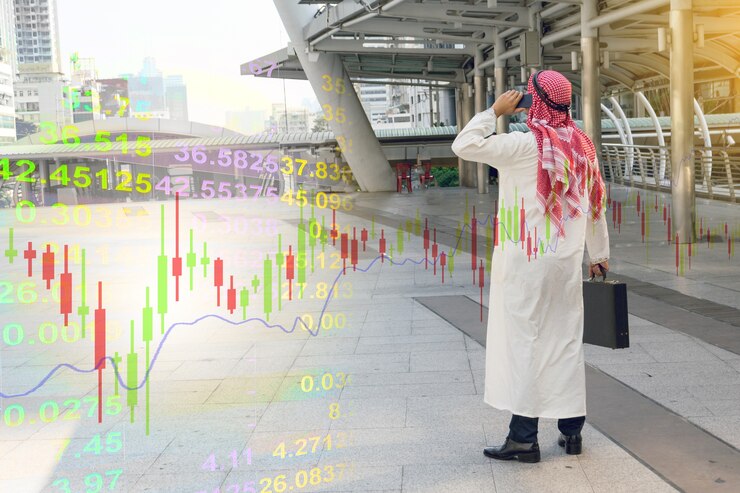
The global currency market manages more than $7.5 trillion per day. Millions of traders are faced with a basic dilemma – how to playForex while adhering to their religious beliefs? Religious compliance in Forex has gone well beyond the original bonds of Islamic Finance, giving rise to a whole ecosystem of faith-based trading methodologies whose integrity upholds spiritual values and the pursuit of financial objectives.
This transformation isn’t simply just following rules. It’s about redefining what it transforms to be ethical trading in the more connected world.
What is religious compliance in the Forex Markets?
Religious compliance in Forex is the practice of trading that is consistent with certain faith-based principles and moral guidelines. While Islamic finance holds the lion’s share of this market, other religious traditions are crafting their own ethical currency trading systems.
The general idea centres on three universal principles shared by many different ways of life: against using unfair practices of exploitation, being transparent, and being ethical with money practitioners. These principles translate into specific trading requirements which vary by the religious tradition but which have common ground in encouraging responsible market participation:
Modern religious compliance isn’t simply rule-following. It includes the full trading ecosystem everything from selecting brokers to risk management, keeping no one facet of the trading process without spiritual values.
Islamic Finance: The cornerstone of ethical Forex Trade
Islamic finance principles are the backbone of Ethically compliant Forex trading. The forbidding of Riba (interest), Gharar (excessive element of uncertainty), and speculation provides a context in which many other religious traditions can coalesce ‘sort of’ in agreement with their own values.
The Three Pillar of Halal Forex Trading:
Sharia-compliant Forex requires forex exchanges to be immediately settled with no interest-based swap fees for overnight positions. Traders must be wary of too high a leverage, and generally, they will limit their exposure to conservative ratios to avoid this gambling type of behavior.
Risk management then turns from being a strategy for trading to becoming an obligation that approaches divinity. Italian traders in the 15th Century: Islamic – directed towards informed analysis (as opposed to speculating on betting) trading within a casino, that is, currency markets are viewed as just economic activity.
The 2025 landscape reflects his breathtaking increase in Islamic Forex options. Specialized brokers now offer sophisticated swap-free accounts with transparent pricing structures, and as a result compliance is easier than ever before.
The Rise Of Islamic Finance Beyond Islamic Finance: Other Religious Views On Forex
Christian traders frequently use Bible principles of stewardship in trading currencies, which includes such concepts as taking responsibility for wealth management and not engaging in practices that can harm others. Some denominations encourage people to withdraw from high-frequency trading or over-secretiveness because it is seen as greed in these respects.
Jewish trading would take into account some aspects of business ethics that are included in Talmudic law, especially that of dealing fairly and refraining from deception in financial dealings. Orthodox communities at times have set some guidelines for acceptable trading practices within their religious frames.
Buddhist and Hindu traditions introduce the ideas of non-attachment and ethical behavior with regard to Forex trading. These approaches often prioritize mindful trading practices, taking steps to avoid emotional decision-making, and considering the impact of trading activities on society as a whole.
The 2025 Revolution: Religious Compliance (Digital)
The Islamic finance industry is undergoing a wave of digital transformation like never before in 2025. Assets are to reach almost $4.94 trillion with the growth led by digital platforms.
Artificial intelligence is even now powering Sharia compliance monitoring, and now automatically flagging trades that may violate religious principles. These systems analyze market conditions, trading patterns, and contract structures in real-time, providing an instant feedback to religious traders.
Key 2025 Trends:
Mobile Islamic banking apps have broken down the access to compliant trading platforms. Younger, tech-savvy Muslims are becoming fans of these digital solutions, which are providing innovation in user interface design and customer experience.
Blockchain technology: The future of transparency and audibilities for religious compliance can be unsettled by blockchain technology. Smart contracts can automate Sharia principles, making it impossible to err or to break the law of the Smart contracts as they stand under Sharia law.
ESG Integration: Where faith and Sustainable Finance Intersect
Environmental, Social and Governance (ESG) principles are converging with religious compliance around Forex trading. The CSRD Enforcement regulations that came into effect in 2025 require EU brokers to disclose ESG exposures, creating natural synergies with faith based approaches to trading.
Religious traders are more and more coming to prefer currencies of countries with sound environmental and social justice policies. Swedish Krona and Swiss Francs are favored by ethically-minded traders; whereas currencies from countries with inferior ESG ratings are put under a microscope.
This alignment adds together to powerful investment strategies. ESG enhanced carry trading Inspire profitable interest rate opportunities while promoting sustainable economy.
Practical Application – How to Trade with Religious Compliance
Choosing the Right Broker:
Religious conformity begins with choice of broker. Look into platforms with authentic and transparent Islam accounted fee structures. Avoid brokers that are disconnected from the real world instead rebating swap fees, but retain interest-based pricing models…. Verify that regulatory compliance is by recognized Islamic finance authorities. The best brokers are certified by multiple Sharia advisory boards so that there would be wide acceptance across the various Islamic schools of thought.
Developing Trading Strategy:
Religious traders have a home-field advantage over technical speculation. Currency movement based on economic indicators and changes in economic policy is closer to the underlying ethical trading principles than chart based guesswork.
Position sizing becomes important for compliance in religions. Never risk more than 1-2% of your capital on single trades, while preservation of the wealth became a religious obligation, not mere smart risk management.
Technology and Tools:
Now with the advent of modern trading platforms, Islamic compliance features are built into the system. Automated Risk Management: Automated tools can be used to prevent violations of religious principles while ensuring that it executes at competitive execution speeds.
Real-time ESG data integration assists religious traders to balance currency choices with their competitor faith investments in order to develop investment strategies which can respect both faith and financial goals.
Challenges Ahead For Religious Forex Compliance In 2025
The absence of standardization in the global sphere is the greatest challenge to religious Forex trading. Different scholar have different interpretations of compliance requirement: resulting in confusions for the traders to get clear idea.
Interpretation Variations:
Some Islamic scholars allow limited leverage for legitimate hedging purposes, however others forbid any leverage of borrowed capital in the currency trading environments. These kinds of differences cause compliance uncertainty that can block decision making.
The definition of “excessive uncertainty” differs greatly from one religious authority to another. What is acceptable market analysis and what is prohibited speculation is hotly debated.
Market Structure Issues:
Modern Forex markets work on fractional reserve systems which are considered by some religious authorities to be entirely at odds with the principles of ethical finance. These structural concerns do not only apply to individual trading decisions but to the whole industry.
Cross-border regulatory differences add to these challenges. A trading method that may be considered to comply in Malaysia may come under scrutiny from the religious authorities in Saudi Arabia.
Regional Growth & Market Expansionb.
GCC Islamic finance market is projected to grow by 15-17% per annum in next 4 years, driven by digital innovations and the supports of the governments. This expansion brings unprecedented opportunities for Forex traders in this field.
Non-Muslim countries are adopting the principles of Islamic foundry as ethical alternatives to conventional banking. London, Singapore, and Hong Kong are now competing for business in Islamic finance, sanitation being the key word in that.
Corporate adoption is not just hastening in traditional Muslim-majority areas. Companies all around the world use Sukuk, Murabaha and other Islamic finance tools for lawful commercial purposes, validating in the view of mainstream financial markets.
Technology’s role in Religious Compliance
Algorithmic trading systems have already been added to these parameters by including religious compliance criteria, whereby before an algorithm or metric executes a trade, there is a system screening for Sharia and for prohibited facts. These systems remove human error but retain the ability to trade fast enough to produce great results.
Machine learning algorithms analyze the market conditions and detect the opportunities based on religious principles. Pattern recognition is useful in helping determine the difference between valid economic activity and disallowed speculation.
Mobile applications offer 24/7 access to religious advisory services – traders can access Islamic religious scholars in real-time. This immediate feedback loop avoids compliance violations before they happen.
The Future of Compliance with Religion in FX
The intersection between the financial activities of faith-based financial institutions and the environmental social and governance (ESG) investing of the broader market creates powerful market dynamics. Religious compliance as a complicity, competitive advantage is real and is making a journey from being an autologous requirement, to a necessity undertaken by global investors concerned to consider ethics.
Standardization projects are gathering momentum as Islamic finance regulation has been working towards some standard compliance standards. This coordination will limit the confusion and increase market accessibility.
Digital innovation also continues to change the way religious compliance is done from being a manual management activity to an automated system. Smart contracts and blockchain technology hold the promise of aesthetic adherence to religious principles.
A rising Muslim population that is projected to represent over 30% of the world’s population by 2050 guarantees sustained growth of religiously acceptable financial services. This move in demographics will accelerate innovation and market growth for decades.
Religious compliance in Forex is not just rule-following, it is a fundamental shift in taking ethical trading steps. As we enter 2025, this movement is only gaining momentum with the possibilities for traders who not only value spiritual integrity, but also value financial success. The blending of technology, regulatory commodities, and increased acceptance across the world make religious compliance a defining attribute of modern Forex markets.
Whether you practice Islam, Christianity or other faith-based systems of thought, the currency markets provide ever more sophisticated tools for staying true to guidepost principles while working to legitimately earn returns.